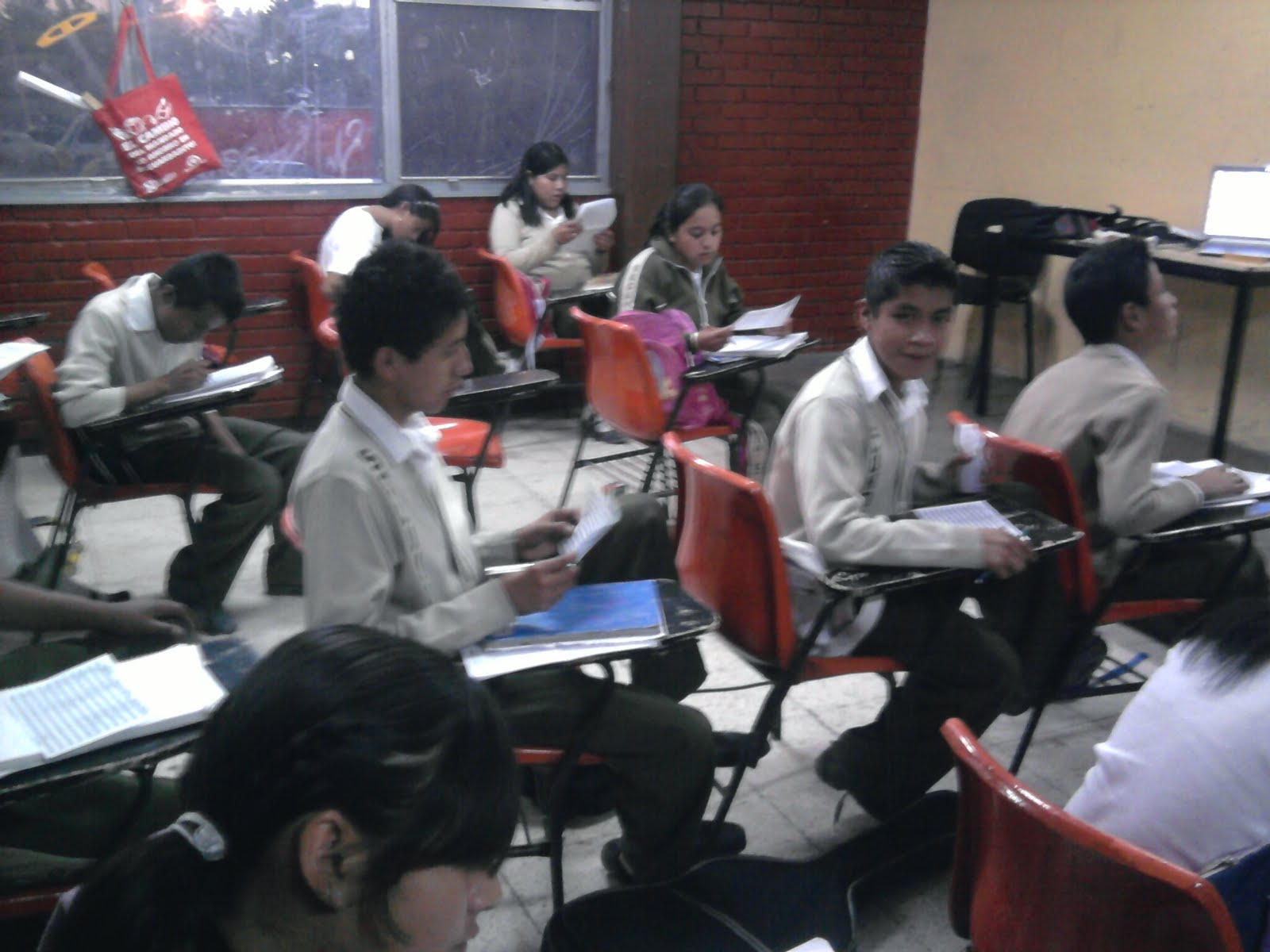
As Piaget, Vygotsky believed that kids build their own knowledge, however, to Piaget the cognitive construction occurs more with the interaction with the physical objects. To Vygotsky, the cognitive construction is “socially mediated”, always is influenced by the social interaction; what the teacher teach to the student, influence in what the student “build”.
Vygotsky believed that, both physical manipulation and social interaction are necessary to the child development. Without the presence of the teacher, the learning will not the same. In the social interaction, the kid learns which characteristics are the most important, which must distinguish and which have to act. In a share activity, the teacher influence directly in the learning process. [6]
As Piaget as Vygotsky, are author of the constructivist theory, that in small words is that the child has to build his/her own knowledge though physical contact objects (Piaget) or social interaction (Vygotsky). [1]
Talking about “constructivism”, a tool that is use is the “cognitivism”. Cognitivism abandoned passive mechanical orientation of behaviorism and sees the student as an active processor of information through the registration and organization of such information to reach its reorganization and restructuring in the cognitive apparatus of the learner. Explaining that this restructuration is not reduced to assimilation, but a dynamic construction of knowledge too.That is, the processes by which knowledge changes. In Piagetian terms, the accommodation of knowledge structures to new information. “The cognitivism helps to the learning as a process which is inside, produced by the student as a result of the interaction between the information and the active student”. [4]
Putting together the constructivism and the cognitivism, we can make any activity relationated with them that is call “didactic activity”. When we talk about activities, usually we make reference to planed and designed activities, which goal is that the students make determinate objectives. In other words, in short words, we can say that a didactic activity is a designed activity to reach a goal. The activities and the sequences will have positive educative effects during the teaching-learning process.
The didactic sequences are set in order that the activities are going to be presented throughout the ones that are in the process of teaching-learning. So, the emphasis is in the succession of the activities, not in the activities as its own, statement that justify the meaning that get the connection of the activities.
The didactic sequences will imply a premeditate succession (planning) of the activities (an order), which will be developed in a determinate period of time (with rhythm). The order and the rhythm build the parameters of the didactic sequences; moreover some activities could be proposed without it (realized in a space-temporal context different to the classroom).
We should remember that the didactic sequence is oriented to the development of the “syllabus plan”, that is either, the smallest unit or the “irreducible” unit that contain the functions or basic elements of the process of teaching-learning: planning, develop and control. The “syllabus units” are the same as primes in math.
“The didactic sequences build the heart of the didactic, the “here and now”, the moment of the true that are in game either the success of the game or the failure of the process of teaching-learning” [5]. The didactic sequence implies short-term planning, that during the performance converges with the long-term.
According to Zabala Videilla [1], the activities of the didactic sequences should consider the following general or essential purposes:
· Inquire about students' background knowledge and check your level is suitable for the development of new knowledge.
· Ensure that contents are meaningful and functional and represent, and to represent a challenge or an acceptable challenge.
· To promote mental activity and the construction of new conceptual relations.
· To encourage self-esteem and self-concept.
· To enable the autonomy and metacognition.
Although, provably, exist many didactic sequences as the teacher can imagine, the value made (of the teacher) consist in formulate and select the most convenient during the development of the course.
But the question, “which is the best didactic sequences?” does not have a general validity and universal answer yet, because it has to make a contextualized answer according to the space, the time and the circumstances [2].
Can we use the same didactic sequence the whole year? This is not a good idea, especially in the context of our disciplines that, since the inductive, it should constitute a permanent base of inspiration and innovation, but this could have it own exceptions [3].
It is clear that the didactic sequences have a variable duration according to the difficulty of the topics raised. In different schools the didactic sequence is for each period of time. We know that in some cases the teacher only cares to finish the contents instead of realize that his/her students already have the knowledge necessary.
Here is an example of didactic sequences strongly influenced Piaget, his methodology is to structure each class following four steps, promotion
1. Promotion or development of cognitive conflict
Individual technique, motivating, presenting a problem situation.
Student Activity: Reading a newspaper article
2. Recovery of prior knowledge
Individual skills of inquiry, for example: questioning dialogue.
Activity: The teacher transcribes on the board the main concepts addressed in the article, and asks students about issues that require further conceptual.
3. Presentation of new content
Individual technique, exhibition, through recurrent and exemplification preparatory treatment.
Activity: Students will take notes of the theme.
Group technique, through analysis of experiences shared
Activity: Students speak out on what conclusions can be inferred.
4. Location on the cognitive schema of the new knowledge
Group technique, recapitulation and closure questions.
Activity: Students answer questions and develop a conceptual outline of the subject
Individual technique, motivating, presenting a problem situation.
Student Activity: Reading a newspaper article
2. Recovery of prior knowledge
Individual skills of inquiry, for example: questioning dialogue.
Activity: The teacher transcribes on the board the main concepts addressed in the article, and asks students about issues that require further conceptual.
3. Presentation of new content
Individual technique, exhibition, through recurrent and exemplification preparatory treatment.
Activity: Students will take notes of the theme.
Group technique, through analysis of experiences shared
Activity: Students speak out on what conclusions can be inferred.
4. Location on the cognitive schema of the new knowledge
Group technique, recapitulation and closure questions.
Activity: Students answer questions and develop a conceptual outline of the subject
In conclusion I could say that all in education is linked; to talk about constructivism is to talk about behaviorism, cognitivism, metacognitivism, didactic activities, didactic sequences, Piaget, Vygotsky, Krashen and so for.
The didactic sequences are groups of activities that are interrelated; they have the function to make easier the knowledge. According to Saint Onge in one of his postulates, that the education has two models the spiral one and the lineal one, the sequence didactic has to be in both education models. We as teacher have to make background in the class (spiral model) but it has to be in a sequence (lineal model) from easiest to more difficult.
References
1. http://basica.sep.org.mx
6. SNTE (2011). “Principios de la psicología y la educación”, en Curso-Taller, Fortalecimiento para Docentes 2011. Tema 3. Dominio de los Enfoques de los Planes y Programas y Programas de Estudio de Educación Básica. Pp.23-26.